M
Michael Vitale
Jul 2026
Posted on GoogleRead full →
RTC LEAGUE builds LiveKit voice agents, SIP telephony and real-time video apps, then runs them for you on LiveKit Cloud or your own servers. One team owns the build and the production operations, led by the #1 ranked contributor on the LiveKit community leaderboard.
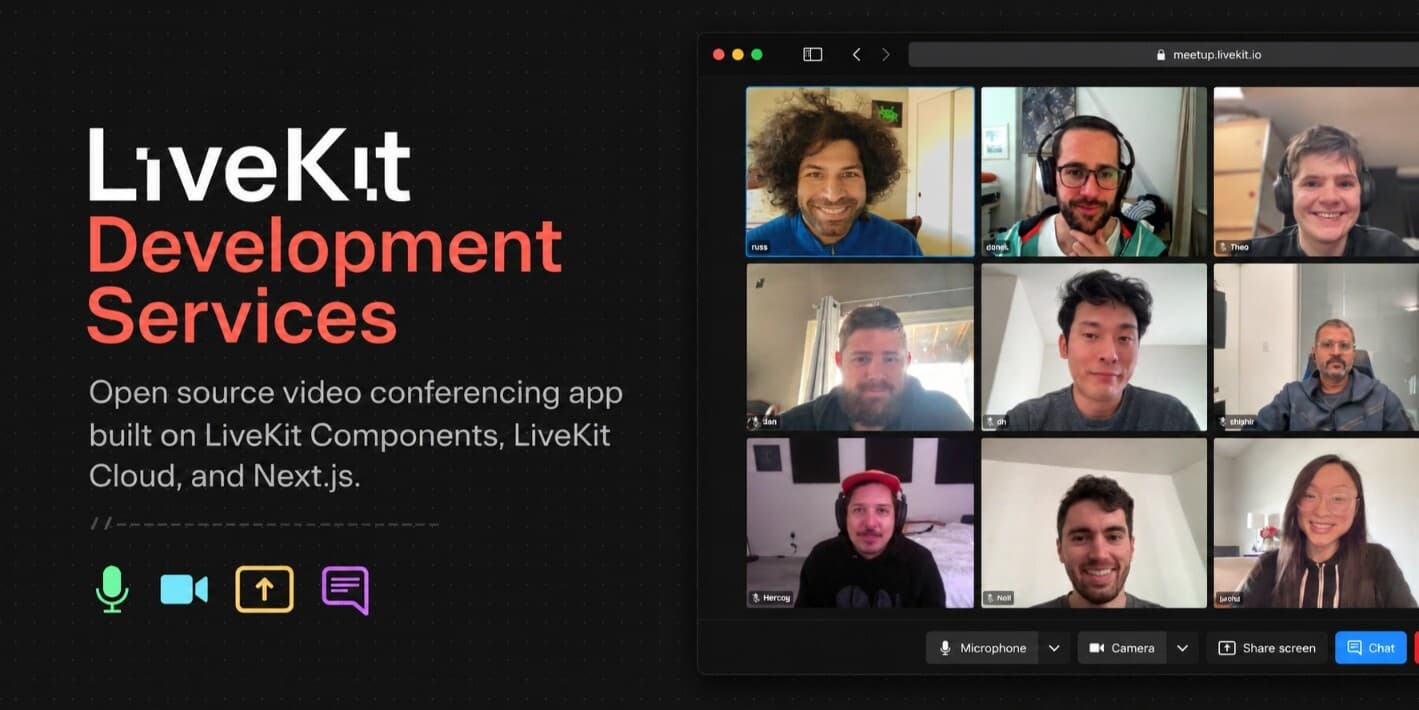
LiveKit development is the work of designing, coding and shipping apps on LiveKit's open source real-time stack. We build for the traffic you'll have in month six, not for the demo.
LiveKit gives you the parts: a media server, the Agents framework, SIP telephony and client SDKs. Making them hold up under 500 callers at once is the hard part.
Our LiveKit development team designs the architecture, writes the code and load-tests it before launch. You get a system that's been broken on purpose in staging, so it doesn't break in front of customers.
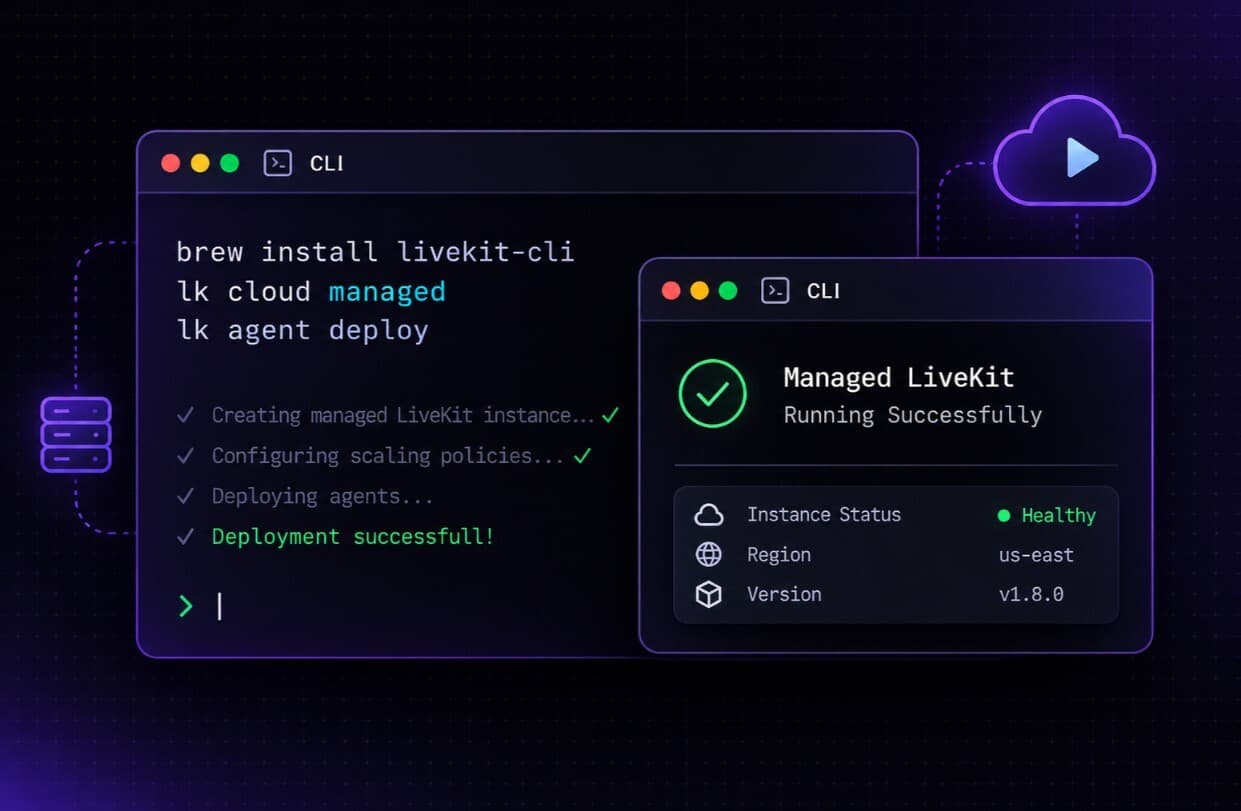
Managed LiveKit means RTC LEAGUE operates your LiveKit infrastructure, agents and SIP trunks after go-live. It works on LiveKit Cloud, self-hosted LiveKit, or a mix of both.
LiveKit Cloud manages LiveKit's media network. It doesn't manage your agent code, your prompts, your SIP carrier, or the 2 a.m. call where the bot talks over a voicemail greeting. Our managed LiveKit service covers that gap.
Pick LiveKit Cloud when launch speed matters and call volume is uneven. Every Cloud plan lists 99.99% uptime and includes managed agent hosting and built-in observability (LiveKit pricing).
Pick self-hosted LiveKit when media must stay in your own VPC, or when steady high volume makes per-minute billing expensive. We deploy it with Docker or a LiveKit Kubernetes setup, with Redis for multi-node routing.
Many teams go hybrid: agents on their own servers, media on LiveKit Cloud. LiveKit's own community team describes this as a valid way to balance cost (LiveKit Community).
We build LiveKit agents that listen, reason and speak in one streaming pipeline. Each agent runs your business logic, tool calls and handoffs, not just a chat prompt.
LiveKit Agents is the open source framework that lets an AI program join a LiveKit room as a participant. Our job is to make that participant fast, accurate and safe to put in front of customers.

Deepgram, AssemblyAI, Speechmatics and other STT plugins, tuned for phone audio and accents. Turn detection tells the agent when the caller has actually finished.

OpenAI, Anthropic, Google and open models behind one interface. Streaming replies, prompt caching and tool calls stay inside the latency budget.

ElevenLabs, Cartesia, Rime and other voices, including custom voice clones. The agent stops talking cleanly when a caller interrupts.

Multi-agent handoffs, task groups and session memory. A booking agent can pass a caller to billing without losing a single detail.

Muhammad Usman Bashir, our CTO, ranks first on the LiveKit Global Community Leaderboard out of thousands of contributors. That rank comes from four years of solving production problems in public: the same SIP, dispatch and scaling issues your team will hit.


When you hire LiveKit developers from RTC LEAGUE, the person reviewing your architecture is the person the LiveKit community already asks.
View LiveKit Global LeaderboardA LiveKit voice agent in production must handle call spikes, language switches, transfers and CRM updates on every call. These four capabilities ship with every voice agent we build.

High call volumes over SIP and PSTN (the public phone network), with answer detection so outbound agents wait for a real "hello".

Our multilingual agents switch language mid-call, including Urdu and other non-English markets, using STT and TTS models picked per language.

Dispatch rules, priority queues and warm transfers to a human when the agent reaches its limits.

Every call writes back through CRM integration with HubSpot, Salesforce, Zendesk or your own API, so records stay current without manual entry.
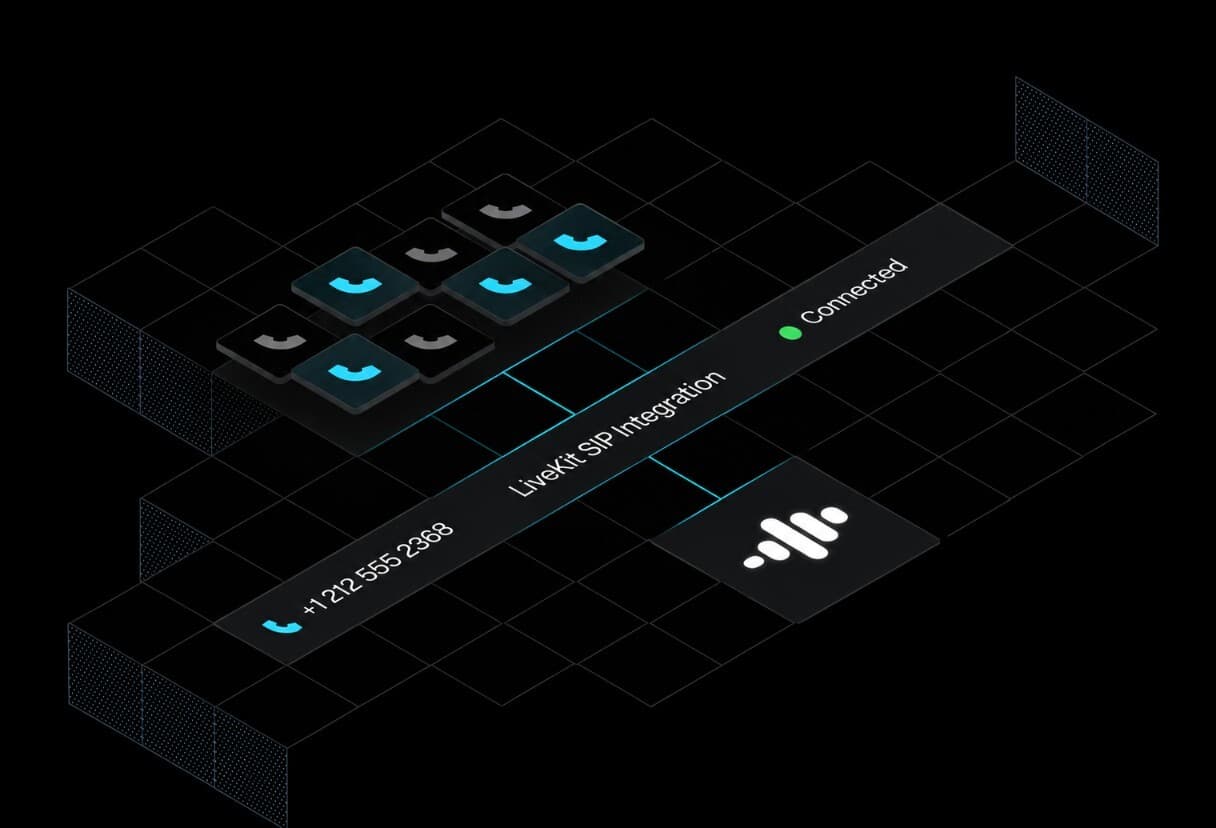
LiveKit SIP connects phone calls to LiveKit rooms, so a caller and your AI agent meet in the same session. We configure SIP trunks, dispatch rules and answer detection so calls connect cleanly at volume.
Most outbound problems we fix share one cause: the carrier reports "answered" before a person is actually on the line. The agent starts its greeting into ringback or a voicemail box. We solve it with answer and voicemail detection, plus carrier-specific SIP tuning.
This is what lets LiveKit run contact centers, healthcare lines and support desks without dropped audio.
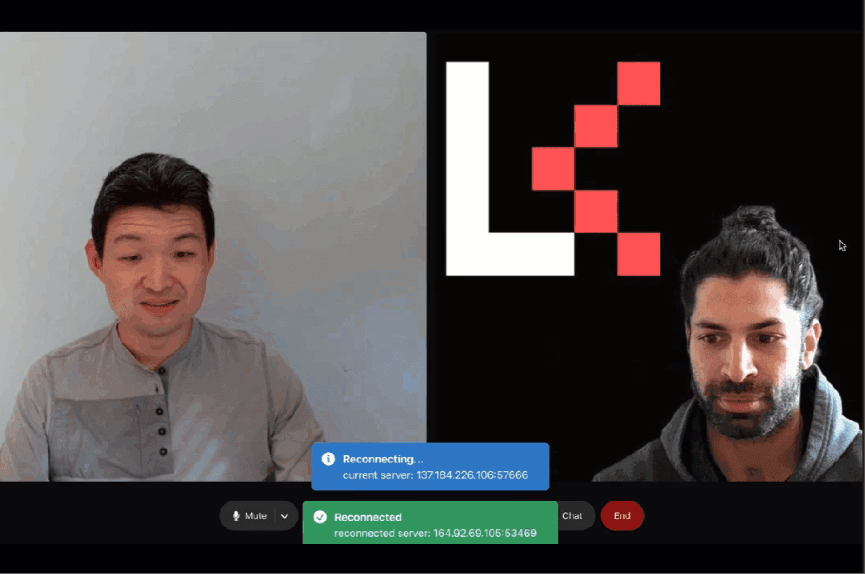
We build interactive video and audio apps on LiveKit where people talk, not just watch. LiveKit Cloud delivers media worldwide in under 250 ms, we keep your app inside that budget.
We tune each app against real network tests, so video stays clear when your users join from a train or a hospital Wi-Fi.
We move real-time workloads onto LiveKit from other video, voice AI and telephony platforms, in stages with a rollback path. Call history and routing rules come with you.

We map rooms, tracks, tokens and webhooks to LiveKit equivalents and run both stacks side by side until cutover.

Move hosted voice agents onto LiveKit Agents so you own the pipeline, pick your own models and control per-minute cost.

Both use the same server, APIs and SDKs, so we move infrastructure, not your app code.

Call records, transcripts, numbers and routing rules carry over intact, so compliance and reporting don't reset.
We specialize in mission-critical real-time systems where every second of downtime affects revenue and trust.
Production WebRTC development work across LiveKit server, LiveKit Cloud, Agents, SIP and every major SDK, led by the community's #1 ranked contributor.
We build custom clients on the official LiveKit SDKs and add the auth, telemetry and product logic your app needs. One codebase pattern covers web, iOS, Android and cross-platform apps.
Building on LiveKit's core SDKs keeps your app current as the framework moves forward.


We work with teams whose revenue depends on calls and sessions that connect every time.
If a dropped call or a 3-second pause costs you a customer, your LiveKit stack needs production-grade engineering.
Most LiveKit apps don't fail in development. They fail 30 to 90 days after launch, when real traffic arrives. These are the five failure zones we audit in every LiveKit development and managed LiveKit project.
Agents that take seconds to join a room, often from Redis latency or room-creation patterns. LiveKit documents a dispatch baseline under 150 ms, we get you back to it.
STT, LLM and TTS delays add up into awkward pauses. We measure each stage and cut the slowest first.
Early "answered" signals, voicemail greetings and duplicate INVITEs when SIP runs on a separate host. We test every carrier route before launch.
Sessions that crash when concurrent users spike. We load-test media routing past your forecast.
No per-turn traces, so nobody knows which stage failed. We add metrics, traces and call recordings from day one.
LiveKit Cloud runs the media network, self-hosting gives you full control, and managed LiveKit adds a team that runs everything above the network. Most production voice AI teams need the third layer whichever hosting they pick.
LiveKit's own calculator estimates about $0.048 per minute for a phone-based agent on Build or Ship, covering session, telephony, LLM, STT, TTS and observability. Third-party SIP minutes cost $0.004 on Ship and $0.003 on Scale. HIPAA (signed BAA) and region pinning start on Scale.
Direct answers to the questions teams ask before scaling LiveKit into production.
Building on LiveKit, or tired of running it yourself? Send us your architecture and we'll show you what's missing before your users find it.
Our real-time solutions work together to build a complete intelligent ecosystem for your business.